Select language


HELMET POSITION
The equestrian helmet must be worn in a horizontal position, properly centered on the head, with the front edge positioned approximately one to two centimeters above the eyebrows. It must not be tilted backwards or pulled too far forward, as incorrect positioning reduces protection of the most exposed areas in the event of a fall. The helmet must fit evenly around the head without pressure points and remain stable when moving the head. Incorrect positioning may partially compromise the field of vision.

CORRECT VISOR POSITION
KEP Italia offers four visor versions to suit different needs and disciplines: Classic, Polo, Cross and Jockey.

The Cromo 2.0 and Smart Nova models feature an independent visor replacement system, allowing quick and easy changes. Correct visor repositioning is essential to avoid compromising field of vision and helmet stability. Visors must align evenly with the shell edge and fit uniformly.


CHOOSING THE CORRECT SIZE
To ensure optimal protection, selecting the correct helmet size is essential.
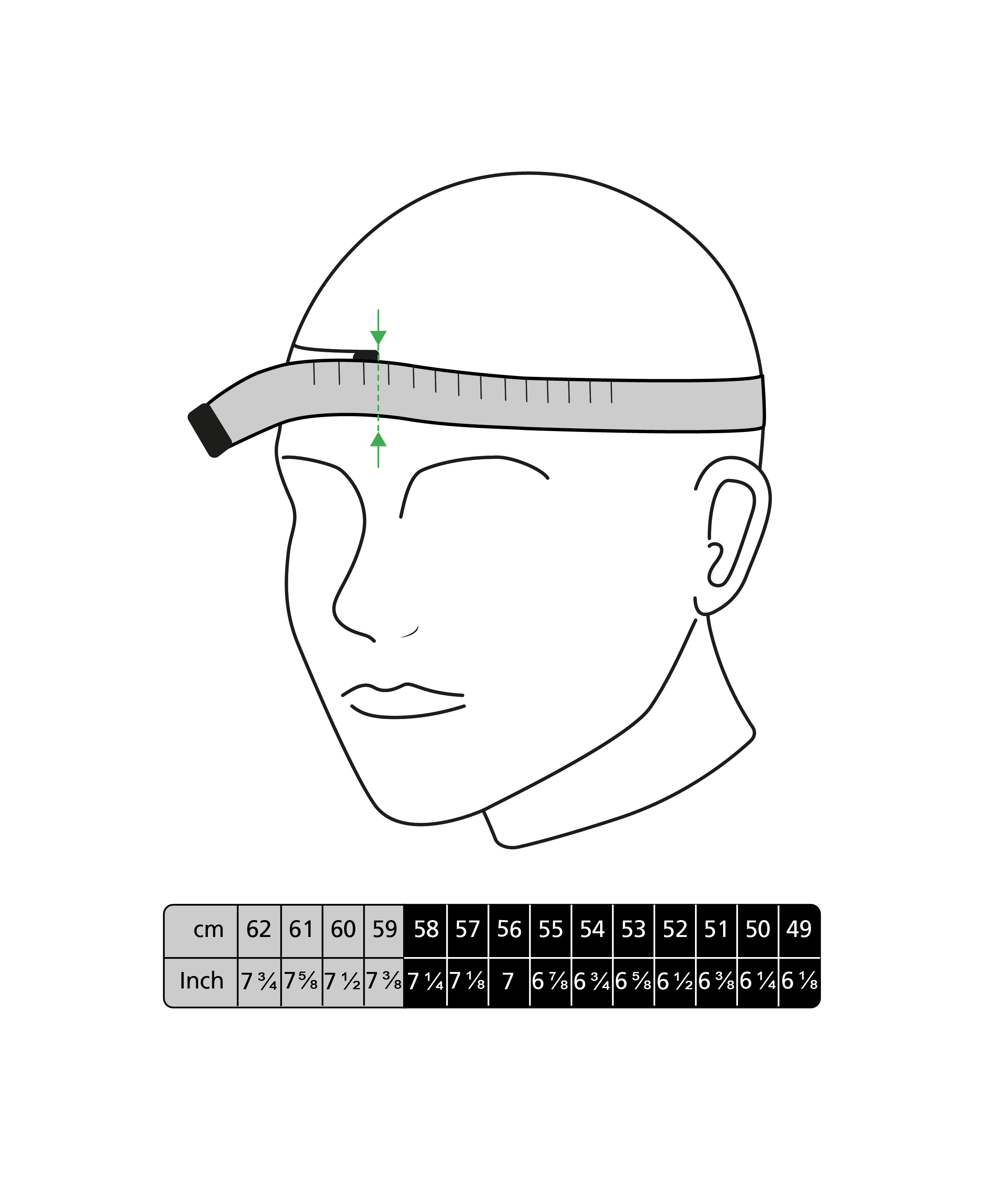
Head circumference should be measured using a tailor’s tape, positioned horizontally around the widest part of the head, approximately one centimeter above the eyebrows and above the ears. KEP Italia’s single-size padding system ensures an easy and intuitive selection: the measured circumference corresponds directly to a specific padding/size. A correctly sized helmet should feel snug yet comfortable, without moving or rotating once worn.


The equestrian helmet is a personal protective device and must be used exclusively by a single user. Over time, the internal padding adapts to the shape of the wearer’s head, ensuring correct fit and stability. Use by multiple people or the purchase of second-hand helmets does not allow verification of the product’s history and may compromise safety performance, even in the absence of visible signs of wear or impact.
REPLACEMENT AFTER IMPACT
After a fall or strong impact, the helmet must always be replaced, even if there is no visible damage. The internal polystyrene, which absorbs most of the impact energy, may suffer microfractures or compression that compromise its protective effectiveness. Continuing to use a helmet involved in an impact significantly increases the risk in the event of further falls, as the original level of protection can no longer be guaranteed.

CORRECT CHINSTRAP FASTENING AND ADJUSTMENT
The chinstrap must always be properly fastened before riding. It should be adjusted to sit securely under the chin without excessive tightness; one finger should fit between the strap and the chin. A correctly adjusted helmet must not shift or come off during head movements or in the event of impact.

ENVIRONMENTAL CONDITIONS AND HELMET CARE
Store the helmet in a cool, dry place away from direct heat sources. High temperatures may damage helmet materials and compromise protective properties.
Avoid prolonged exposure to direct sunlight. UV rays may deteriorate materials and cause color fading.
Keep the helmet in a dry environment. Humidity may damage materials and encourage mold and unpleasant odors.
Use the original KEP Italia bag when the helmet is not in use. The bag protects the helmet from dust, scratches and accidental impacts.
Store the helmet horizontally on its base or hang it using the dedicated hook. Avoid placing heavy objects on the helmet, as this may cause deformation.
When traveling, transport the helmet in its original bag and ensure it is positioned to avoid pressure or impacts. Never leave it in a car under direct sunlight.
DOWNLOAD THE INSTRUCTION MANUAL
All the information you need for the correct use and care of your KEP Italia equestrian helmet.


